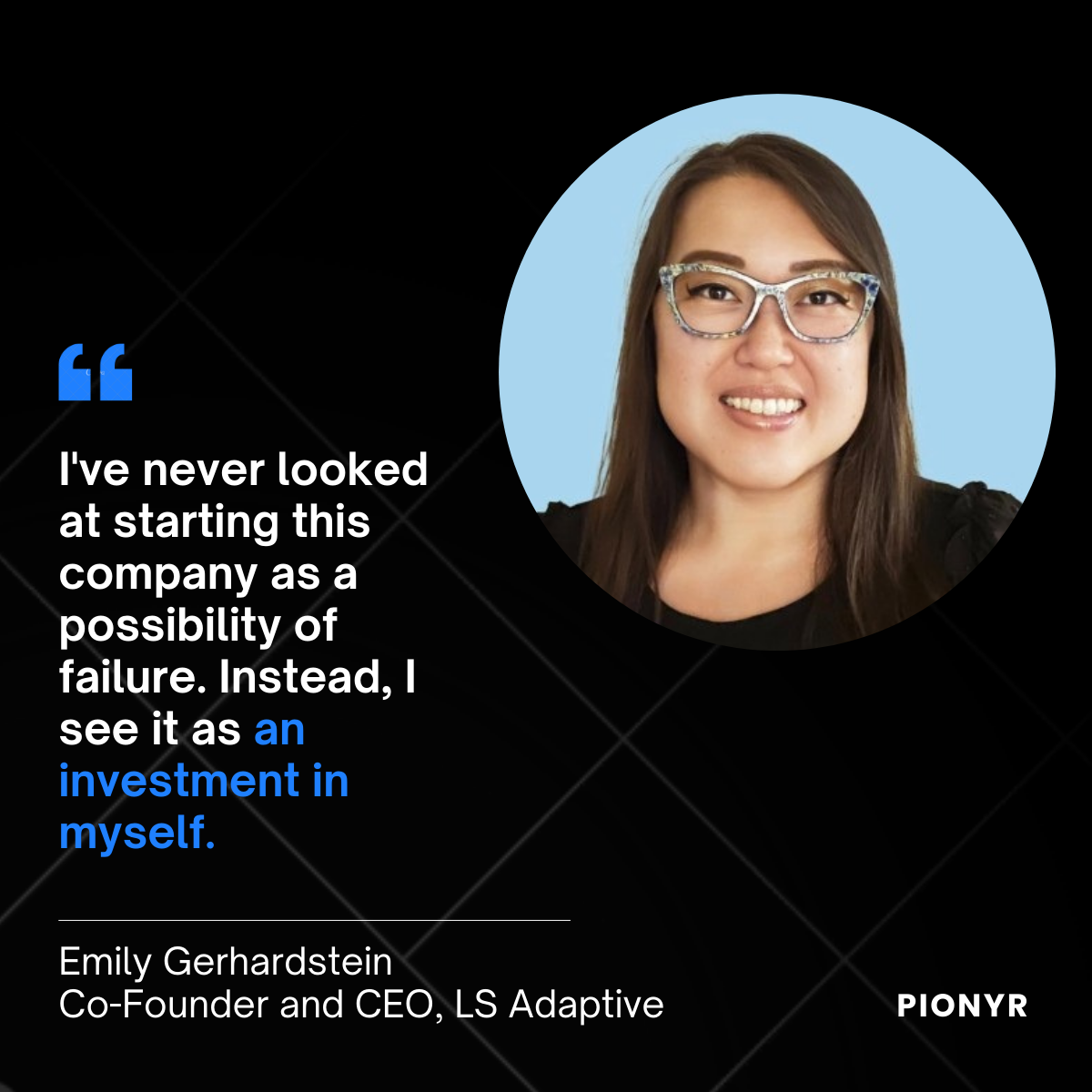
Emily Gerhardstein is the Co-Founder and CEO of LS Adaptive, a mission-driven startup that uses innovative magnetic technology for one-handed use to create adaptive clothing, designed to save time and simplify dressing for those who need it most.
What's one truth about being a founder that no one prepared you for?
One truth about being a founder that no one truly prepares you for is that everyone is figuring it out as they go.
What's been the hardest trade-off bootstrapping has forced you to make?
Bootstrapping is all about making tough decisions. A few years ago, I had been saving for a house renovation, but when I decided to launch my startup, I redirected those savings to build the business instead. I also made the difficult choice to liquidate my portfolio (not something I recommend, but I was financially fit and carefully evaluated multiple scenarios). It was a deeply personal decision, but one I felt strongly about because of the mission behind my company. My life partner and I had also made a conscious decision to buy a more affordable home, even though we were tempted by something more expensive. We prioritized financial flexibility, ensuring that if something happened, my partner could handle the mortgage on his own. That decision turned out to be one of the best we've made; it gave us the space to live comfortably without financial strain, and I was able to create a home studio for my work. The biggest sacrifice has been cutting back on travel, which I love, but I've learned to focus on the bigger picture.
Bootstrapping forces you to be resourceful and intentional with every dollar. It's not easy, but it's incredibly rewarding to see your sacrifices directly fuel your company's growth and impact.
The apparel space is crowded and capital intensive. What's been your edge in standing out?
Our edge lies in authenticity and purpose.
What's a moment that felt like failure, and how did it end up shaping your company?
One of the earliest challenges we faced was realizing that our original tagline was far too similar to a competitor's. I pride myself on being thorough when it comes to research and vetting, but somehow, this one slipped through the cracks. It felt like a failure because it wasn't just about the tagline, it made me question whether I was truly differentiating our brand in a crowded market.
But instead of dwelling on the mistake, I used it as an opportunity to dig deeper into what makes us unique.
As a first-time founder in a tough category, what's helped you stay grounded when the odds felt stacked against you?
This journey has been a full-circle moment for me. Coming from the retail industry and having been a founding member at a high-growth, VC-backed startup in magnetic technology, I felt prepared to step into this space as a first-time founder. But as an Asian female bootstrapping my own company, I've faced my fair share of challenges through unbiased comments, unsolicited feedback, and, of course, the occasional mansplaining.
What's kept me grounded is shifting my mindset. I've never looked at starting this company as a possibility of failure. Instead, I see it as an investment in myself.
Emily has nearly 20 years of experience in retail, specializing in merchandising, product development, and design across diverse categories, including women's, men's, and kids' apparel, hard and soft home goods, and hosiery. She has worked with brands like Belk, Gymboree, OshKosh B'gosh, Gap, Martha Stewart, and Kayser Roth. Most recently, she was a founding member and VP at a high-growth startup focused on magnetic technology for eyewear.
Emily's journey has now come full circle. Her inspiration stems from her personal caregiving experience. Emily left her role to caregive for her parents, her dad, Leo who has aphasia (a form of dementia), and her mom, who suffers from severe osteoporosis and has experienced multiple health challenges. Her "aha moment" came while helping her father in the bathroom, realizing he could do everything except manage the tricky top button on his pants. This sparked the idea for LS Adaptive. Emily reconnected with her former colleague, Scott Craycraft, and together they founded LS Adaptive to create adaptive solutions for those who need them most.
Real founder playbooks, straight to your inbox.